Operator Stability
Are local providers able to stay open, hire staff, manage costs, and operate sustainably?
The Conversation
A national conversation rooted in local communities, child care supply, and practical action.
Child care affects whether operators can remain open, whether families can work, whether employers can hire and retain staff, and whether communities can attract families and grow.
Why this conversation exists
In many places, child care is still treated as a private family issue or an isolated service challenge. The National Main Street Child Care Conversation is designed to help local leaders see the full supply-side system, understand where fragmentation is holding progress back, and begin identifying what kind of local operating system is needed.
Join the Conversation
Main Street Child Care is a public conversation about child care supply, operators, employers, families, and the local conditions that make Main Street communities work.
As the conversation grows, we'll use LinkedIn to share questions, field notes, community observations, and practical ideas from across the Main Street Child Care platform. Follow along, share what you are seeing locally, and help surface the patterns communities need to understand as they move from concern to action.
For deeper field learning and updates from Business of Child Care, explore the BOCC News page.
What we are listening for
Are local providers able to stay open, hire staff, manage costs, and operate sustainably?
Are there enough child care slots to support families, employers, and community needs?
Are buildings, licensing, staffing, wages, or operating costs limiting supply?
Are businesses experiencing absenteeism, turnover, or hiring challenges tied to child care supply?
Are local leaders, employers, funders, and operators organized around a shared path forward?
Where the conversation is growing
The conversation is growing across regions and communities through 2026. Some communities may participate through in-person stops. Others may engage through virtual conversations, the Main Street Pulse, local meetings, or future planning discussions.
The map below represents a growing national conversation and regional reach. It does not imply that every marked region is a confirmed stop.
Bring the Conversation to Your Community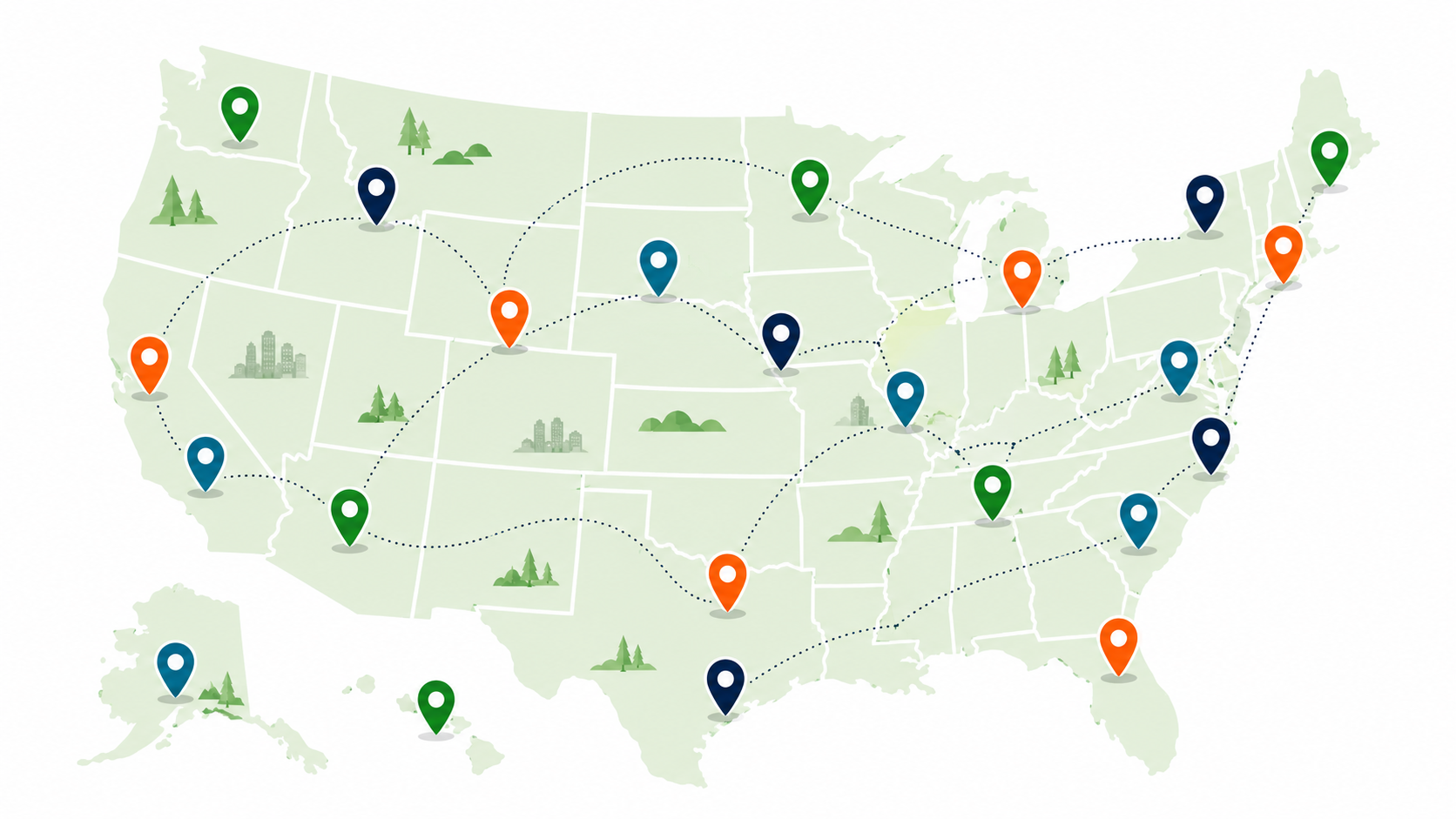
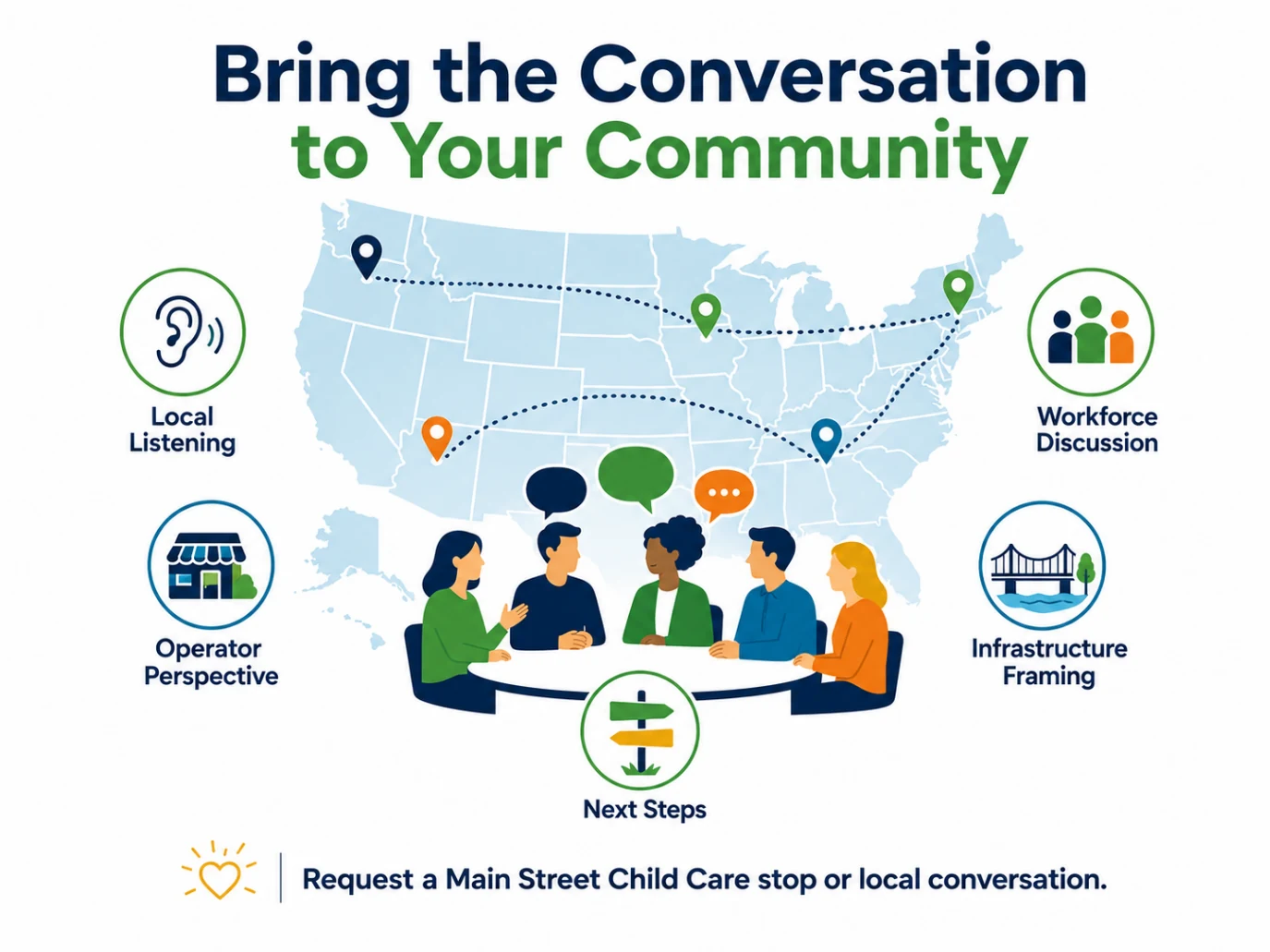
What a local conversation can include
Conversations with community leaders, operators, employers, families, and partners.
A focused discussion about operator stability, available slots, workforce, facilities, and local barriers.
A look at how child care supply affects employment, business stability, and local growth.
A shared discussion about child care as infrastructure and what local operating capacity may be needed.
A practical discussion about what the community may need to create a foundation, organize what exists, build what is needed, and sustain what works.
Get involved
A Main Street Child Care stop can help your community begin or strengthen the local conversation around child care as infrastructure.
This may be a good fit if your community is: